
For many property owners in Cebu, buying real estate is not only about owning a home—it’s also about generating income. Whether you own a condominium in Cebu IT Park, a house in Banilad, or an investment property in Mactan, one important question eventually arises:
Should you rent your property short-term or long-term?
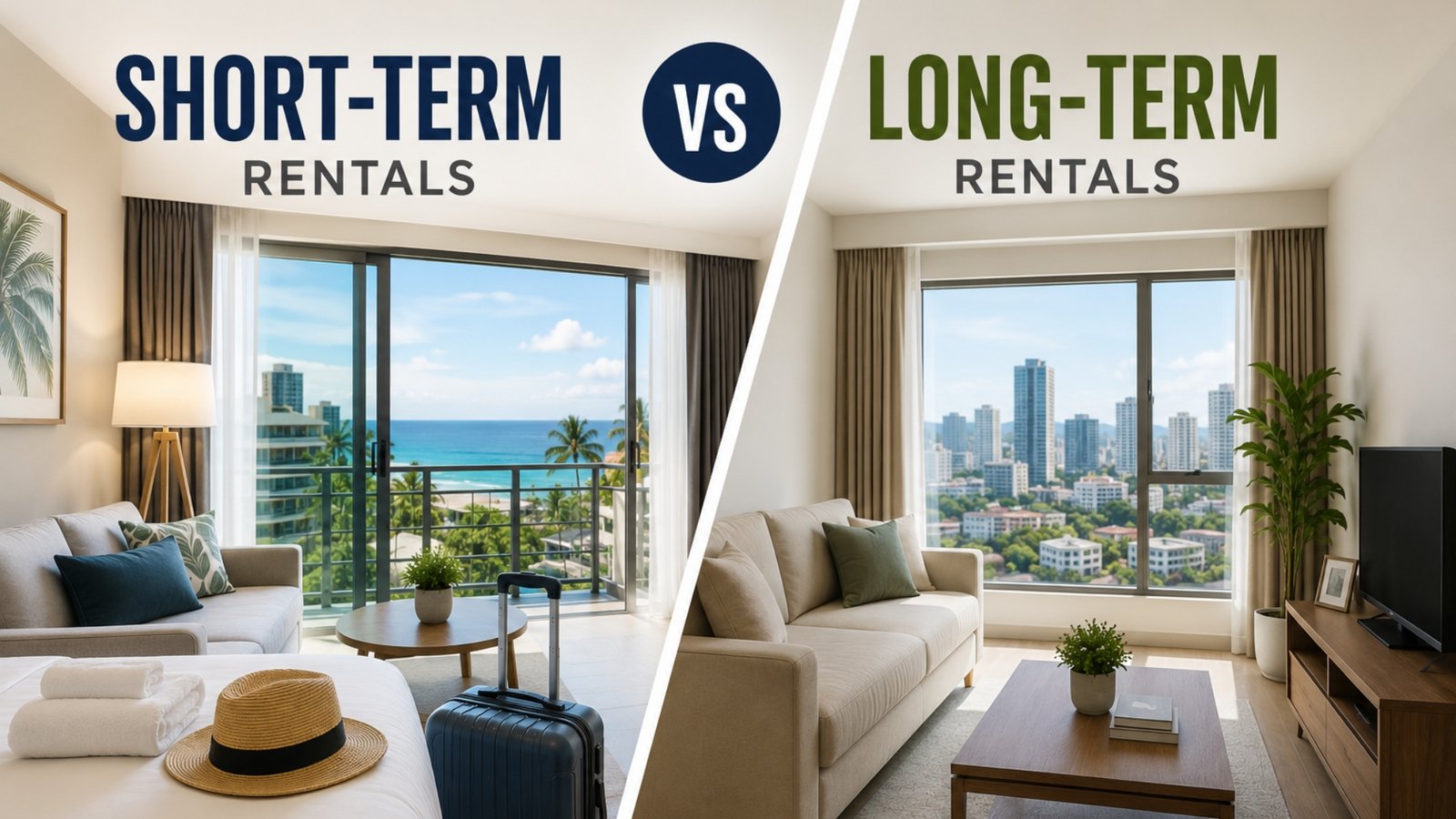
Both strategies have their advantages, and the answer depends on your goals, location, budget, and how involved you want to be in managing the property. While short-term rentals may offer higher income potential, long-term rentals often provide more stability and less day-to-day management.
Understanding the differences between these two approaches can help property owners maximize returns and make smarter investment decisions.
Why Cebu Is an Attractive Rental Market
Cebu has become one of the strongest property markets in the Philippines. The city attracts professionals, students, digital nomads, retirees, tourists, and foreign investors throughout the year.
Areas such as:
- Cebu IT Park
- Cebu Business Park
- Banilad
- Lahug
- Mactan Island
- Talamban
continue to experience strong housing demand.
This diverse demand gives investors multiple opportunities to generate rental income through either short-term or long-term leasing.
However, not all locations perform equally under both strategies.
Understanding Short-Term Rentals
Short-term rentals typically involve stays ranging from a few days to several weeks. These properties are commonly listed on platforms like Airbnb and attract tourists, business travelers, remote workers, and vacationers.
Short-term rentals have become increasingly popular in Cebu, especially in areas close to beaches, airports, and business districts.
Owners who choose this model often aim to maximize monthly revenue by charging higher nightly rates.
Advantages of Short-Term Rentals
Higher Income Potential
One of the biggest reasons investors choose short-term rentals is the possibility of earning more compared to traditional leases.
During peak seasons and holidays, occupancy rates and nightly prices can increase significantly. In high-demand locations, one month’s income from short-term guests may exceed what a long-term tenant would pay.
Properties near:
- Mactan beaches
- Cebu IT Park
- Ayala Center Cebu
- Business districts
- Tourist attractions
often perform well under this model.
Flexibility for Property Owners
Another advantage is flexibility.
Owners can block dates for personal use or decide when the property is available for guests. This option appeals to people who want both an investment and a vacation home.
Unlike long-term leases, short-term rentals don’t lock owners into year-long contracts.
Better Property Control
Because guests change frequently, owners can regularly inspect and maintain their property.
Problems are often discovered earlier compared to long-term rentals, where issues may go unnoticed for months.
Challenges of Short-Term Rentals
Despite their attractive income potential, short-term rentals require considerably more work.
Managing guest inquiries, check-ins, cleaning, maintenance, and reservations can become time-consuming.
Vacancy periods can also affect profitability. During slower travel seasons, occupancy rates may decline, reducing income.
Additionally, furniture, appliances, utilities, internet, and cleaning services are usually included, increasing monthly expenses.
Property owners who prefer passive income may find this management style demanding.
Understanding Long-Term Rentals
Long-term rentals generally involve lease contracts lasting six months, one year, or even several years.
This strategy is common among:
- Local professionals
- Families
- Expats
- Students
- Overseas Filipinos returning to Cebu
Long-term rentals provide more predictable income and less operational complexity.
Benefits of Long-Term Rentals
Stable Monthly Income
One of the greatest advantages is consistency.
Property owners know exactly how much rent they will receive every month, making financial planning easier.
There are fewer concerns about occupancy fluctuations or seasonal demand.
This stability appeals to investors seeking dependable cash flow rather than maximum returns.
Less Management
Compared to short-term rentals, long-term leasing requires much less daily involvement.
There are no frequent guest turnovers, check-ins, or constant cleaning schedules.
Once tenants move in, owners can enjoy relatively passive income with only occasional maintenance responsibilities.
For busy professionals or overseas investors, this simplicity can be extremely valuable.
Lower Operating Costs
Long-term rentals often have lower operating expenses.
Tenants usually pay for:
- Electricity
- Water
- Internet
- Cable services
This helps reduce the owner’s monthly costs and improves predictability.
Which Rental Strategy Generates More Income?
This is perhaps the most common question among investors.
The answer depends largely on location and occupancy.
Short-Term Rentals
Short-term rentals may generate higher gross income, especially in:
- Mactan Island
- Cebu IT Park
- Cebu Business Park
- Tourist areas
However, these higher revenues come with higher expenses and more active management.
Income can fluctuate depending on tourism and seasonal demand.
Long-Term Rentals
Long-term rentals generally produce lower gross income but offer greater consistency.
Vacancies are less frequent, operating costs are lower, and management requirements are simpler.
For many investors, steady income with fewer headaches is preferable to chasing maximum revenue.
Location Matters More Than Strategy
The property’s location often determines which approach performs better.
Mactan Island
Because of its beaches and tourism appeal, short-term rentals often perform well here.
Vacationers and foreign visitors create strong demand throughout the year.
Cebu IT Park
Business travelers, remote workers, and professionals make both short-term and long-term rentals attractive.
This area offers flexibility for investors.
Banilad and Talamban
These neighborhoods attract families and professionals seeking longer stays.
Long-term rentals are generally more suitable in these areas because residents value stability and convenience.
Cebu Business Park
Condominiums near Ayala Center Cebu appeal to executives, expats, and business travelers.
Owners can successfully use either strategy depending on their goals.
Which Option Is Better for First-Time Investors?
For new property investors, long-term rentals are often easier to manage.
The predictable income, lower expenses, and reduced workload make them less stressful.
Short-term rentals can be highly profitable, but they require active management and a deeper understanding of hospitality and customer service.
Many experienced investors recommend starting with long-term leases and later exploring short-term opportunities once they gain confidence and experience.
Can You Switch Between Both Strategies?
Absolutely.
Many owners adapt based on market conditions.
Some properties operate as short-term rentals during peak seasons and transition to long-term leases when tourism slows down.
This hybrid approach provides flexibility and allows owners to respond to changing demand.
However, switching strategies requires planning and understanding local regulations, property management requirements, and market trends.
Which Strategy Is Right for You?
A short-term rental may be ideal if:
- You want maximum income potential.
- You don’t mind active management.
- Your property is located in a tourist or business area.
- You enjoy hospitality and guest interactions.
A long-term rental may be better if:
- You prefer stable monthly income.
- You want passive cash flow.
- You have limited time for property management.
- You prioritize consistency over maximizing revenue.
Ultimately, the best strategy depends on your investment goals, lifestyle, and property location.
Final Thoughts
Both short-term and long-term rentals can be profitable in Cebu.
Short-term rentals offer higher earning potential and flexibility but require more time and management.
Long-term rentals provide stability, lower expenses, and peace of mind.
Neither approach is universally better. The right choice depends on your goals as a property owner and the characteristics of your property.
As Cebu continues to grow and attract tourists, professionals, and international investors, rental demand is expected to remain strong—creating opportunities for both strategies.
Looking to Invest in Rental Property in Cebu?
At Cebu City Property, we help buyers and investors find properties that match their financial goals. Whether you’re interested in Airbnb opportunities, long-term rental income, condominiums, or houses for investment, our team can help you make informed decisions.
Contact us today and discover the best investment opportunities in Cebu.




Join The Discussion